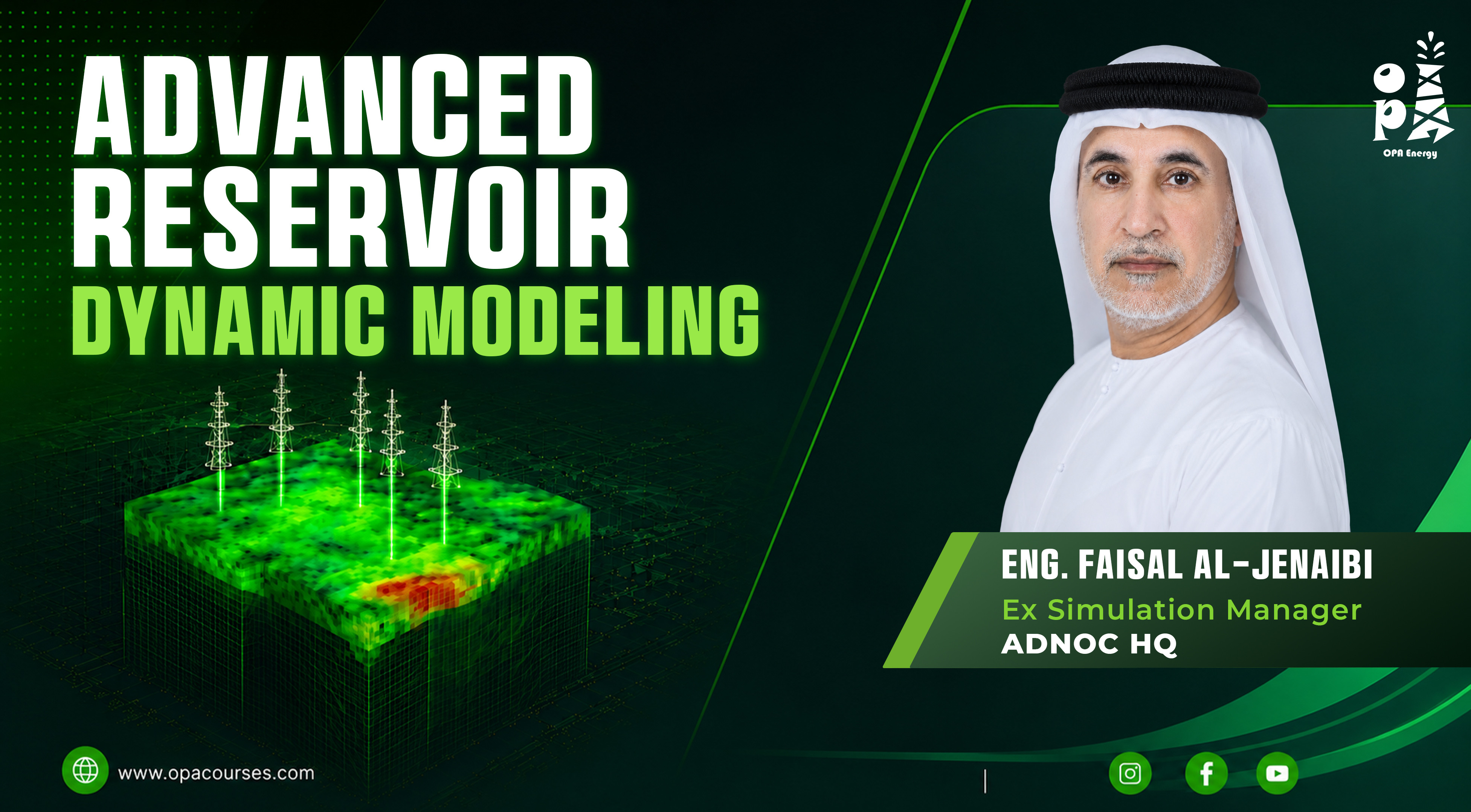
Workshop covering advanced reservoir simulation, dynamic model initialization, and history matching techniques to improve subsurface modeling accuracy and performance.
Best Seller

Faisal holds a BSc in Chemical and Petroleum Engineering from Al-Ain University, obtained in 1991. He currently serves as a Reservoir Simulation Engineer Advisor for Rock Flow Dynamic Company (RFD) before that he worked for ADNOC for 32 years, where he specializes in advanced simulation models technology for oil and gas development. His expertise includes built assessment and validates dynamic models, managing oil and gas fields development, and preparing technical reports for senior management.
Faisal was lead subsurface studies for complex reservoirs, ensuring alignment between geological models and observed data. He promotes knowledge sharing within the subsurface community through technical reviews and milestone meetings. He is also involved in training UAE national young employees, focusing on developing their expertise in reservoir simulation.
In his role, he has successfully implemented new and promising technologies and workflows to enhance dynamic model performance and reduce risks associated with dynamic modeling.
This Course Focused on advancing the SCAL framework through innovative tips and new methodologies aimed at enhancing model representation. The speaker will delve into effective strategies designed to minimize volumetric gaps while simultaneously optimizing the dynamic model performance. Address key challenges in the modeling process, particularly the redesign of grid cells to more accurately replicate geological faults, will be thoroughly examined. Attendees can expect to gain valuable insights that not only address these challenges but also contribute to more robust and efficient modeling practices in their respective fields. Don’t miss this opportunity to elevate your modeling capabilities and drive impactful results.

Evaluation of the Advanced Reservoir Dynamic Modeling Workshop, incorporating both the course content and my feedback on the instructor. Overall Assessment: Excellent / Highly Recommended This workshop delivers exceptional value for petroleum engineers looking to bridge the gap between static geological models and dynamic simulation performance. The curriculum is strategically designed to move beyond "standard" simulation workflows and tackle the high-impact, high-uncertainty areas that often determine field development success. Strengths of the Course Content 1. Advanced SCAL Framework Integration • The focus on advancing the Special Core Analysis (SCAL) framework is a major differentiator. Rather than treating relative permeability and capillary pressure as static inputs, the course correctly positions them as dynamic levers that can drastically alter sweep efficiency and recovery forecasts. • The "innovative tips and new methodologies" are particularly valuable, as they likely address normalization techniques, endpoint scaling, and hysteresis—areas often oversimplified in basic training. 2. Volumetric Gap Minimization • Addressing the disconnect between static GIIP/STOIIP and dynamic performance is a perennial industry challenge. The workshop’s emphasis on minimizing volumetric gaps provides a systematic approach to reconciling geological uncertainties with production data, which is critical for reserves booking and business planning. 3. Practical Grid Design for Faults • The dedicated session on redesigning grid cells to replicate geological faults is highly practical. Many simulation models suffer from numerical smearing or upscaling errors at fault planes. By tackling this, the course directly improves the accuracy of compartmentalization studies and transmissibility calculations. 4. Balanced Workflow • Covering initialization, history matching, and simulation in one workshop ensures attendees understand the causal chain: an improperly initialized model cannot be history-matched effectively, and a poorly matched model cannot predict future performance. Evaluation of the Instructor: Mr. Faisal Al-Jenaibi Criteria Rating Comments Expertise ⭐⭐⭐⭐⭐ As a former Simulation Manager at ADNOC HQ, Mr. Al-Jenaibi brings world-class, operator-side experience. He has likely managed giant carbonate reservoirs, which are notoriously difficult to simulate. This real-world pedigree gives his teachings immediate credibility. Delivery & Clarity ⭐⭐⭐⭐⭐ As I noted, " He masters his subject well " . His ability to convey complex numerical concepts with clarity is a testament to his instructional skill. Practical Knowledge Transfer ⭐⭐⭐⭐⭐ "We leave well-instructed". This is the ultimate metric of success. He does not just present slides; he shares hard-won experiential knowledge. Legacy & Mentorship ⭐⭐⭐⭐⭐ Our recommendation for young engineers is the highest praise. It indicates that his teaching style is accessible to juniors while still being profound enough for seniors. Key Takeaway for Attendees You walked away with "good knowledge from his experience sharing", this is the intangible benefit of this workshop. While textbooks teach theory, Mr. Al-Jenaibi teaches pragmatic decision-making under uncertainty. He likely showed you when to spend extra time on grid design and when to simplify, which is the art of simulation engineering. Recommendations for Future Iterations To make an already excellent course even better, consider these minor suggestions: 1. Add a Hands-On Case Study: If not already included, dedicating 2–3 hours to a live exercise (e.g., using a free simulator or Python notebook) to re-grid a fault or initialize a small model would cement the concepts. 2. Include an Uncertainty Quantification (UQ) Segment: While history matching is covered, a brief module on using Ensemble Smoothers (e.g., EnKF/ES-MDA) alongside traditional manual matching would align with current industry 4.0 trends. Final Verdict This is a must-attend workshop for any reservoir engineer serious about model reliability. The combination of a technically robust curriculum and an industry-veteran instructor like Mr. Faisal Al-Jenaibi ensures that participants return to their offices not just with new knowledge, but with actionable workflows that can immediately improve model performance and reduce reservoir risk. Rating: 9.5/10

The drilling fluid in the well is very similar to the blood in your body, you should test your blood and read your body messages for you and act accordingly to keep yourself healthy. Drilling fluid also send you messages about your well, you should understand your drilling fluid, know its functions, test its properties, and read your well messages to keep your well stable, safe, and efficiently perform your drilling process.

From primary raw general guidelines to detailed sophisticated modeling studies

Organizing, analyzing, and managing data for efficient oilfield operations.

Principles and techniques of well stimulation using hydraulic fracturing methods.

A Comprehensive Nodal Analysis Theory and Practice

Performing and interpreting production logging tools to assess well performance.

Performing and interpreting production logging tools to assess well performance.

Organizing, analyzing, and managing data for efficient oilfield operations.

modeling well performance and production optimization through nodal analysis.

Principles and techniques of well stimulation using hydraulic fracturing methods.

Design, installation, and optimization of electric submersible pump systems.

Planning and executing well perforations to optimize reservoir drainage.

Organizing, analyzing, and managing data for efficient oilfield operations.

Applying rate transient analysis to assess reservoir performance and predict future production.

Core Python programming concepts applied to engineering and data tasks.

Advanced principles and techniques of pressure transient analysis for reservoir evaluation

Designing and executing acid treatments to enhance well productivity.

Techniques and procedures to prevent and manage wellbore kick and blowouts.

Analysis of subsurface formations using logs for reservoir characterization

Techniques for performing complex well interventions safely and efficiently.

Principles and design of gas lift systems to enhance production efficiency.

Simulation of thermal enhanced oil recovery techniques using CMG software.

Studying stress, strain, and rock mechanics to support reservoir management and drilling.

Design, installation, and optimization of electric submersible pump systems.

Strategies to maintain well integrity throughout the well lifecycle.

Master essential skills in Python, SQL, data analytics, machine learning, and MLOps. Gain hands-on experience and practical knowledge to effectively apply advanced data science techniques in the oil industry.

Design, operation, and optimization of sucker rod pumping systems in wells.

More than 20 cases from practical life covering different concepts in Analytical Reservoir Engineering

Hands-on modeling and simulation of reservoirs for production forecasting and planning

Managing process risks to prevent accidents and ensure operational safety.

Ensuring continuous and efficient flow of hydrocarbons through production systems.

Ensuring continuous and efficient flow of hydrocarbons through production systems.

Leveraging Power BI for visualization, analysis, and decision-making in oil & gas data.

Techniques and applications of coiled tubing for well intervention and maintenance.

The Progressing Cavity Pump (PCP) is emerging as a game-changer in oil production. Compared to traditional artificial lift methods, PCPs offer numerous advantages.
Design and execution of well completions for optimal production and safety.
Understanding reservoir fluid behavior and modeling using PVT analysis and equations of state

Optimizing well and field production performance using nodal analysis techniques.
In-depth course on jet pump principles, design, operation, and optimization for efficient artificial lift performance.
This course delivers an end-to-end understanding of the drilling lifecycle, from rig systems and well planning through to field execution.
A structured course on estimating, classifying, and reporting petroleum reserves and resources in line with industry standards.
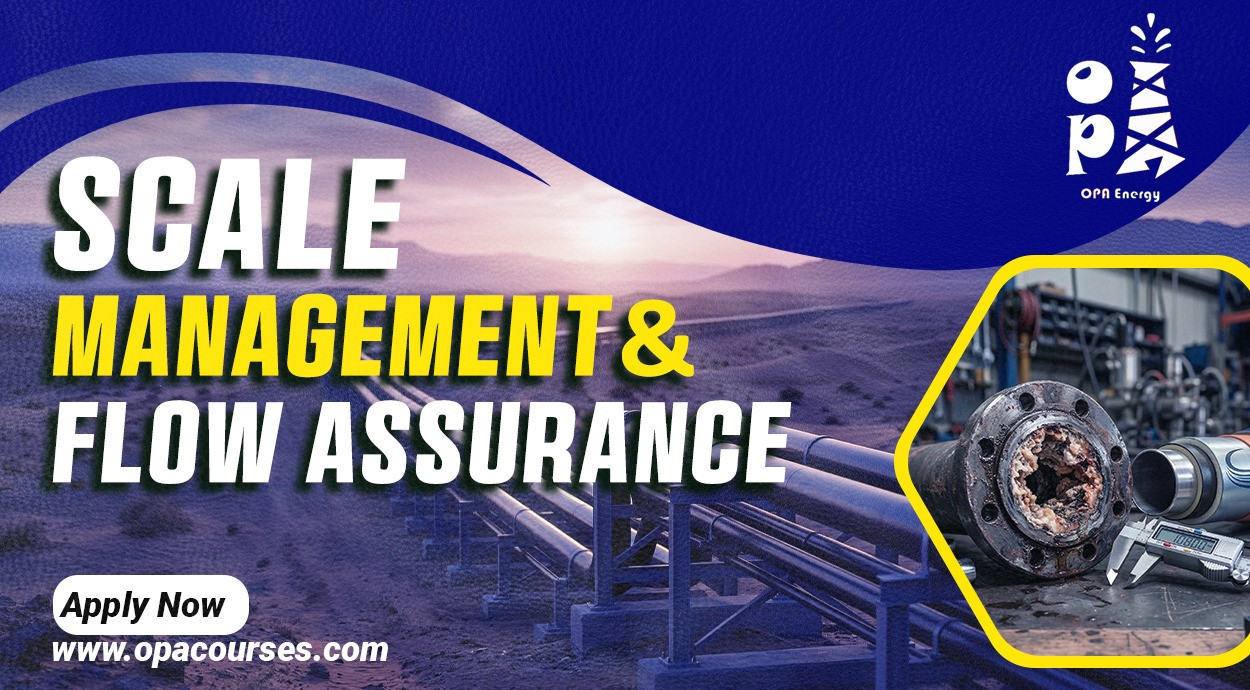
A practical course on preventing, monitoring, and mitigating mineral scale formation to protect well and production system integrity
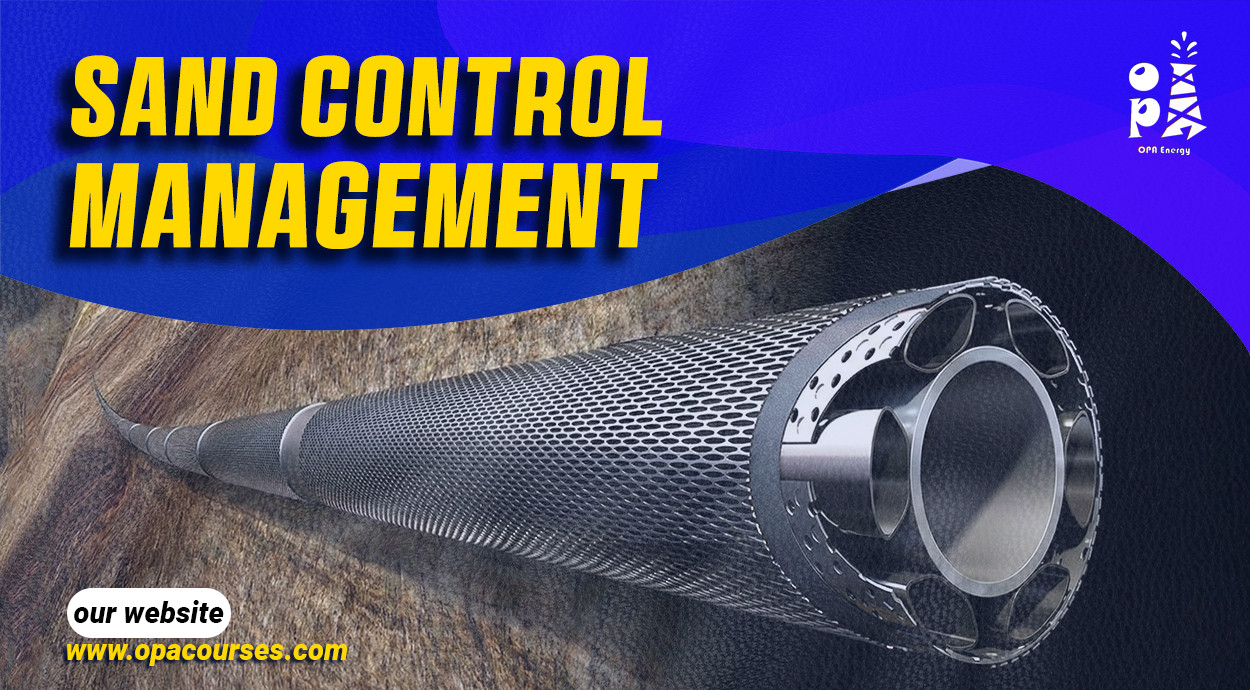
Implementation of mechanical and chemical barriers to prevent reservoir solids from entering the wellbore while maintaining optimal fluid production.
Teach what you love.OPA provides the perfect environment for you to create a professional online course.
Apply for an Instructor Account

Cannot find the course you are looking for? Or do you prefer a dedicated content? Request a one-to-one mentorship now!.
 Login
Login Register